Is Using a Geo Solver Cheating? The Complete Guide to Fair Play in 2025
Is using a Geo Solver cheating? We explore the ethical boundaries, community rules, and the fundamental difference between learning tools and cheating tools. A comprehensive guide to fair play in competitive Geo Game.
The Question Every Player Asks: Is Using a Geo Solver Cheating?
The moment you discover AI tools for Geo Game, a question immediately forms: "Is this cheating?"
It's a valid question. Geo Game is built on skill, knowledge, and the thrill of deduction. The idea of an AI "solver" that can identify locations feels like it undermines everything the game stands for. But the reality is more nuanced than a simple yes or no.
This comprehensive guide will help you understand:
- What constitutes cheating in Geo Games
- The fundamental difference between learning tools and cheating tools
- When and how AI can be used ethically
- Community rules and tournament guidelines
- How to improve your skills without compromising fair play
If you want the training-first version of this philosophy in practice, pair this article with our Ultimate Learnable Meta Guide and AI Geo Game Guide. Those two resources focus on building judgment rather than outsourcing it.
Understanding Cheating: The Core Principles
Before we dive into AI tools specifically, let's establish what cheating means in the context of Geo Game.
The Definition of Cheating in Competitive Gaming
Cheating occurs when you use external assistance during active gameplay to gain an unfair advantage over other players. in Geo Games, this typically means:
- Using tools during a live match (ranked, competitive, or tournament play)
- Getting answers without learning (copying coordinates without understanding why)
- Violating the spirit of competition (gaining scores you didn't earn through your own skill)
Why This Matters in Geo Games
Geo Game is unique among games because it tests real-world knowledge and observation skills. The satisfaction comes from:
- Recognizing patterns yourself
- Learning from mistakes
- Building genuine geographic knowledge
- Competing fairly with others who share your passion
When someone uses a tool to get answers during a match, it:
- Devalues the achievements of honest players
- Breaks the competitive integrity of tournaments
- Prevents genuine skill development
- Violates community trust
The Two Types of AI Tools: Solver vs. Coach
The critical distinction isn't whether AI is used, but how it's used. There are two fundamentally different approaches:
The "Solver" (The Cheating Tool)
A solver is designed to give you the answer immediately, with minimal or no explanation. It's built for speed, not learning.
Characteristics:
- Provides coordinates directly
- Minimal or no reasoning shown
- Designed for real-time use during matches
- Focuses on getting the "right answer" quickly
- No educational value
When it's cheating:
- Used during any competitive match
- Used in ranked play
- Used in tournaments
- Used to inflate your score without learning
Analogy: Having the answer key to a test while you're taking it.
The "Coach" (The Learning Tool)
A coach is designed to teach you how to identify locations yourself. It prioritizes learning over quick answers.
Characteristics:
- Explains the reasoning process step-by-step
- Breaks down clues systematically
- Designed for post-game analysis
- Focuses on teaching patterns and meta knowledge
- Builds long-term skills
When it's ethical:
- Used after you've made your own guess
- Used for practice and skill development
- Used to understand mistakes
- Used to learn new meta clues
Analogy: A tutor reviewing your test answers after you've finished, explaining what you missed and why.
A good workflow looks like this: make your own guess first, then use GeoGuessr AI or Geo Solver after the round to inspect the clues you missed. Used that way, the tool behaves like film study, not a cheat code.
Side-by-Side Comparison
| Aspect | The Solver (Cheating) | The Coach (Learning) |
|---|---|---|
| Primary Goal | Get the answer instantly | Teach you how to identify locations |
| Output Format | Coordinates only, minimal context | Detailed clue breakdown + reasoning |
| Timing | Designed for real-time use | Designed for post-game analysis |
| Learning Value | None - you learn nothing | High - builds genuine skills |
| Use Case | Getting scores you didn't earn | Understanding mistakes and improving |
| Competitive Use | ❌ Violates fair play | ✅ Ethical for training |
| Long-term Impact | No skill improvement | Builds lasting knowledge |
The Science of Learning: Why "Deliberate Practice" Matters
The concept of "deliberate practice," popularized by psychologist Anders Ericsson, explains why some tools help you learn while others don't.
What is Deliberate Practice?
Deliberate practice involves:
- Focused attention on improving specific skills
- Immediate feedback on your performance
- Understanding mistakes and why they occurred
- Repetition with variation to build patterns
- Progressive difficulty as skills improve
How This Applies to Geo Game
❌ Solver Approach (Not Deliberate Practice):
- You get the answer immediately
- No feedback on your reasoning
- No understanding of what you missed
- No pattern recognition
- Result: Zero skill improvement
✅ Coach Approach (Deliberate Practice):
- You make your guess first
- You receive detailed feedback on what clues you missed
- You understand why the location was identified
- You recognize patterns for future rounds
- Result: Genuine skill development
The Chess Analogy
Professional chess players don't use engines during games. Instead, they:
- Play games themselves
- Analyze their games afterward with engines
- Study engine evaluations to understand mistakes
- Learn patterns and strategies for future games
This is exactly how learning-focused AI tools should be used in Geo Games.
The ReverseImageLocation Philosophy: Built for Learning, Not Cheating
From day one, we designed ReverseImageLocation around a single principle: to be a coach, not a solver. This philosophy is embedded in every aspect of our platform.
That is also why our location pages are split by intent. Where Was This Photo Taken is built for practical post-round analysis, while the surrounding guides teach you how to internalize the patterns instead of blindly trusting the answer.
Design Principles That Prevent Cheating
1. Separation of Clues and Inference
We never show you the answer immediately. Instead, we:
- First, show all observable clues - bollards, road markings, vegetation, signage, car meta, etc.
- Then, hide the final location - requiring a conscious click to reveal
- Force self-reflection - you see what clues were available before seeing the answer
This design forces you to think: "Could I have identified this location with these clues?" It's the difference between copying an answer and understanding how to find it.
2. Focus on the "Why," Not Just the "Where"
Our AI's most valuable output isn't the coordinates—it's the Reasoning Summary. This explains:
- Which clue was most decisive
- How multiple clues supported the conclusion
- Why certain regions were ruled out
- What patterns to look for in similar situations
This transforms a "cheat sheet" into a "textbook."
Example: How a Coach Tool Works
Let's see this in action with a real example. Here's what a learning-focused analysis looks like:
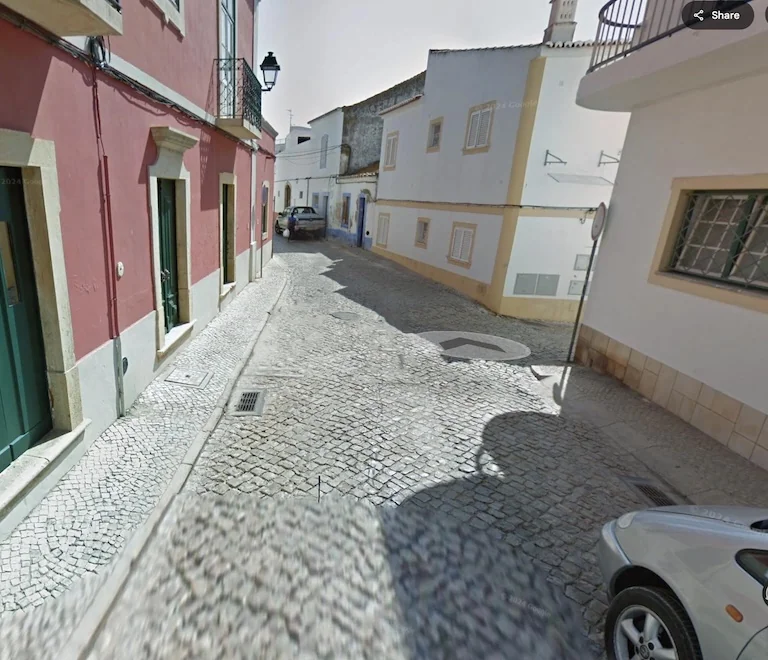
Example: Analysis of a Portuguese location showing key clues like Portuguese cobblestone patterns and white walls with yellow trim—the kind of educational detail that helps you learn, not just get an answer.
A solver would simply say: "Portugal, Algarve region." A coach tool shows you:
- Portuguese cobblestone patterns - distinctive rounded stones
- White walls with yellow trim - characteristic Portuguese architecture
- Regional context - why this points to Algarve specifically
- Confidence level - how certain the AI is (92% in this case)
This way, you learn to recognize these patterns yourself in future rounds.
3. Post-Game Analysis, Not Real-Time Assistance
The ideal workflow is:
- Play the round yourself - make your guess based on your knowledge
- Finish the round - submit your answer and see your score
- Then analyze - upload the screenshot to understand what you missed
This mirrors how professionals in any field improve: they perform, then review, then learn.
4. Educational Context and Examples
Every analysis includes:
- Visual examples of the clues identified
- Comparisons to similar locations
- Meta knowledge explanations (e.g., "This bollard style is unique to France")
- Learning resources for deeper study
Real Examples from Our Platform
Here are actual examples of how our coach tool breaks down locations. Click on any example to see the full analysis:
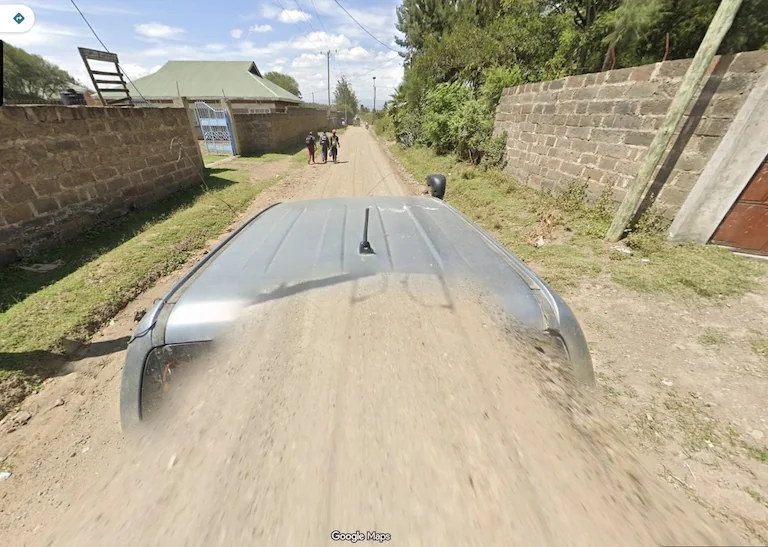
Kenya - Central Highlands
Confidence: 100%
Key Clues: Kenya car meta + Red soil highland landscape
A coach tool explains what "Kenya car meta" means and why red soil indicates highlands, helping you recognize these patterns in future rounds.
View full analysis →
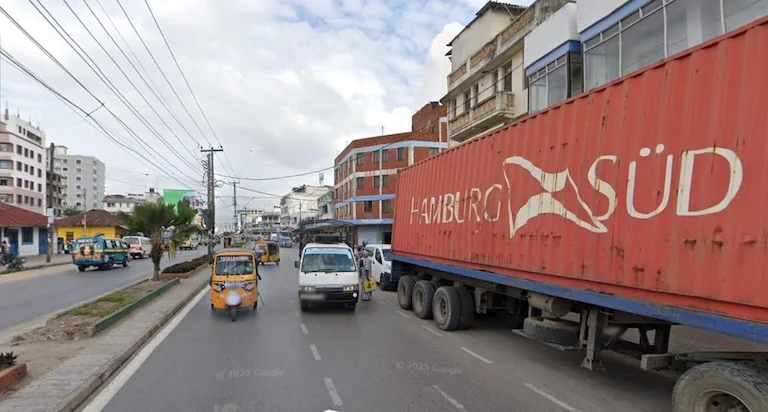
Tanzania - Dar es Salaam
Confidence: 95%
Key Clues: Swahili text + Left-hand traffic
Instead of just giving coordinates, a coach tool teaches you to identify Swahili script and recognize left-hand traffic patterns.
View full analysis →
Notice how each example provides:
- Visual evidence (the actual image)
- Specific clues (not just "Africa")
- Confidence levels (transparency about certainty)
- Educational context (what to look for)
This is the difference between learning and cheating. A solver gives you coordinates. A coach teaches you the patterns.
Real-World Usage Scenarios
✅ Ethical Use Cases:
-
Post-Game Review
- You finish a round and scored poorly
- You upload the screenshot to see what clues you missed
- You study the reasoning to improve for next time
-
Learning New Meta
- You encounter a bollard style you don't recognize
- You analyze it to learn the pattern
- You build your knowledge base for future rounds
-
Practice Mode
- You're practicing on a specific map
- You make your guesses first
- You use the tool to verify and learn from mistakes
-
Skill Development
- You're learning a new region (e.g., Southeast Asia)
- You analyze multiple rounds to identify patterns
- You build systematic knowledge
❌ Unethical Use Cases:
-
During Ranked Matches
- You're playing a ranked game
- You upload screenshots in real-time to get answers
- You use those answers to win
-
In Tournaments
- You're competing in a tournament
- You use the tool to get locations during matches
- You gain an unfair advantage over competitors
-
Score Inflation
- You want to boost your leaderboard position
- You use the tool to get perfect scores
- You haven't actually learned anything
-
Real-Time Assistance
- You keep the tool open while playing
- You check every round before guessing
- You're not developing your own skills
Community Rules and Tournament Guidelines
Official Geo Game Rules
While Geo Game's official terms of service don't explicitly mention AI tools, the general principle is clear: external assistance during competitive play violates fair play.
Most tournaments and competitive events have explicit rules:
- No external tools during matches
- No real-time assistance of any kind
- No automated solving or scripts
- Fair play is expected and enforced
Community Consensus
The Geo Game community generally agrees that:
- ✅ Post-game analysis is acceptable and encouraged
- ✅ Learning tools used for practice are fine
- ✅ Skill development outside of competition is positive
- ❌ Real-time assistance during matches is cheating
- ❌ Score inflation through tools is dishonest
- ❌ Tournament use of any external tool is prohibited
Tournament-Specific Rules
Different tournaments may have different rules, but common guidelines include:
- No external tools during match time
- No screenshots of rounds until after submission
- No real-time communication with tools or other players
- Fair play verification may be required
Always check the specific rules of any tournament or competitive event you enter.
⚠️ Clear Fair Play Guideline
To be absolutely clear: Using any external tool, including ReverseImageLocation, during a live, ranked, or competitive match is against the spirit of fair play and violates the rules of most competitions.
Our platform is a training and learning tool, not a real-time assistant. Use it to improve your skills, not to gain unfair advantages in competition.
The Psychology of Skill Development
Understanding how we learn helps explain why some approaches work while others don't.
The Illusion of Competence
When you use a solver to get answers, you experience an illusion of competence:
- You see the correct answer
- You think "I would have gotten that"
- You feel like you're improving
- But you're not actually learning anything
This is why players who rely on solvers often plateau—they haven't built the underlying skills.
The Power of Mistakes
Research shows that making mistakes and understanding them is crucial for learning:
- Mistakes highlight gaps in knowledge
- Analyzing mistakes builds deeper understanding
- Learning from mistakes creates lasting memories
- Mistakes guide future improvement
A learning tool helps you understand your mistakes. A solver just gives you answers, preventing this crucial learning process.
Building Pattern Recognition
Geo Game skill comes from pattern recognition:
- Recognizing bollard styles
- Identifying car meta
- Reading road infrastructure
- Understanding regional characteristics
This requires:
- Exposure to many examples
- Feedback on what you're seeing
- Explanation of why patterns matter
- Practice applying the knowledge
A coach provides all of these. A solver provides none.
Frequently Asked Questions
Is using ReverseImageLocation during a ranked match cheating?
Yes, absolutely. Using any external tool during ranked, competitive, or tournament play is cheating. ReverseImageLocation is designed for post-game analysis and learning, not real-time assistance.
Can I use ReverseImageLocation to improve my skills?
Yes, that's exactly what it's designed for. Use it after you've made your guesses to understand what clues you missed and learn from your mistakes. This is ethical and encouraged.
What's the difference between ReverseImageLocation and other AI tools?
Most AI geolocation tools are "solvers" that give you coordinates without explanation. ReverseImageLocation is a "coach" that explains the reasoning process, helping you learn patterns and improve your skills.
Is it cheating to use ReverseImageLocation in practice mode?
No. Practice mode is for learning and skill development. Using learning tools in practice is not only acceptable but recommended.
Will using ReverseImageLocation get me banned?
Using ReverseImageLocation for post-game analysis and learning won't get you banned. However, using any external tool during competitive matches may violate tournament rules and could result in disqualification.
How should I use ReverseImageLocation to improve?
- Play rounds normally and make your own guesses
- Finish the round and see your score
- Upload screenshots to analyze what you missed
- Study the reasoning and learn the patterns
- Apply that knowledge in future rounds
Is it cheating if I use ReverseImageLocation to learn meta clues?
No. Learning meta clues (bollards, car meta, etc.) is a legitimate part of improving at Geo Game. Using a tool to understand these patterns is ethical and helps you build genuine skills.
What about using ReverseImageLocation in single-player mode?
Single-player practice is fine. The key distinction is whether you're competing against others or just practicing. In practice mode, learning tools are perfectly acceptable.
Can I share ReverseImageLocation analyses with friends?
Sharing analyses for educational purposes is fine. However, sharing answers during an active competition would be cheating.
How do I know if I'm using ReverseImageLocation ethically?
Ask yourself:
- Am I using this during a competitive match? → Unethical
- Am I using this to learn after I've made my guess? → Ethical
- Am I trying to inflate my score without learning? → Unethical
- Am I building genuine skills and knowledge? → Ethical
The Future of Learning in Geo Games
AI tools don't have to be a threat to fair play. When designed and used correctly, they can:
- Accelerate learning for new players
- Deepen understanding of geographic patterns
- Make practice more effective through detailed feedback
- Preserve competitive integrity by being learning tools, not cheating tools
The key is the distinction we've emphasized throughout this guide: coach vs. solver, learning vs. cheating, skill development vs. score inflation.
Conclusion: The Right Tool for the Right Purpose
So, is using a Geo Solver cheating?
The answer depends entirely on how it's used:
- ❌ If it's a solver used during a live match to get answers you didn't earn? Yes, that's cheating.
- ✅ If it's a coach used after a game to analyze mistakes and learn patterns? No, that's studying and skill development.
The rise of AI doesn't have to diminish the skill and knowledge that make Geo Game special. Instead, it can provide powerful new ways to learn, practice, and appreciate the incredible complexity of our world.
The choice is yours: Use AI to replace your brain, or use it to make your brain sharper. The difference between cheating and learning comes down to that choice.
Tools, Guides, and Articles for This Topic
Move from reading into action with the most relevant solver pages, learnable meta guides, and supporting articles.
Explore the complete GeoGuessr AI hub for ai geoguessr, geoguesser ai, and geoguessr ai solver searches. Compare tools, learn the meta, and pick the best workflow.
Use our advanced GeoGuessr solver for NMPZ, rural rounds, and hard snapshots. Built for players who need deep meta reasoning, not just a broad GeoGuessr AI overview.
Meet the world's most advanced GeoGuessr AI bot. Safer than scripts, our automated AI assistant provides real-time coaching and geographic reasoning without risking your account.
Master Google Street View car meta for GeoGuessr. Identify countries by snorkels, roof racks, tape, mirrors, antennas, camera generations, and car blur.
Master the most reliable meta in Geo Games. A complete guide to identifying countries by their traffic bollards.
Ever felt lost in the Australian outback? This case study breaks down how our AI coach dissects a seemingly impossible location, revealing the subtle clues that pinpoint the country.
Stop guessing, start deducing. This isn't just a list; it's a mental framework used by pro players to deconstruct any Geo Game round with surgical precision.